
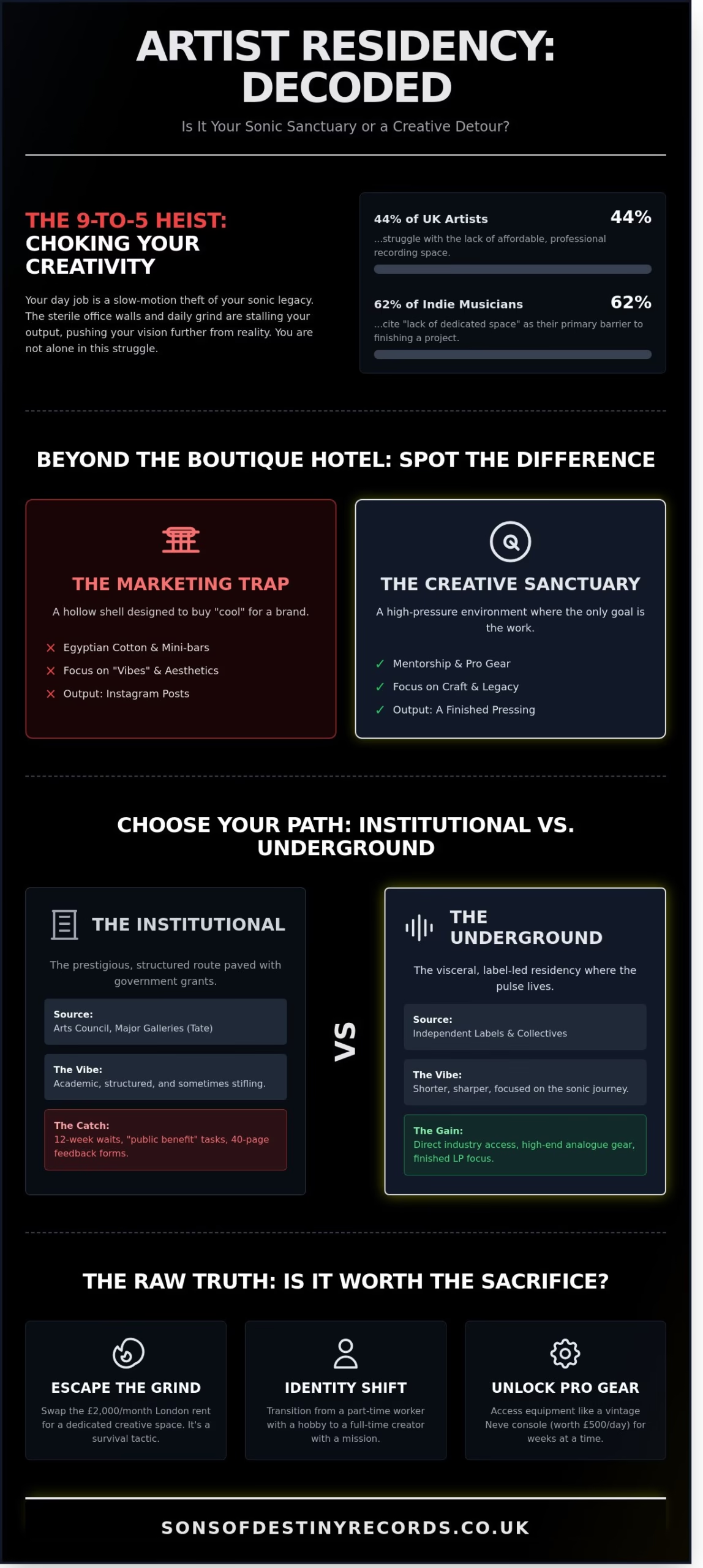
Your 9-to-5 isn’t just paying the rent; it’s a slow-motion heist of your sonic legacy. You feel the weight of the daily commute and the sterile office walls closing in on your creativity. The dream of an artist in residence programme feels like a lifeline, a chance to swap the spreadsheet for the mixing desk and finally press that vision into wax. We know the grit it takes to keep the fire burning when you’re isolated from a like-minded collective. A 2023 report from the Musicians’ Union found that 44 percent of UK artists struggle with the lack of affordable, professional space to record. You aren’t alone in feeling that the grind is stalling your output.
This guide will reveal if a residency is the catalyst your music needs or a detour from your true creative destiny. We provide a clear breakdown of UK residency types and a framework to decide if the time investment is worth the sacrifice. You’ll learn how to find a space that respects raw, authentic sound without the corporate fluff. It’s time to decide if your next chapter is written in a sanctuary or forged in the heat of the daily hustle.
Forget the Egyptian cotton and the mini-bar. When you search for an artist in residence today, you are likely to find a boutique hotel in Shoreditch trying to buy a bit of “cool” by letting a painter sleep in the penthouse. That is marketing. It is a hollow shell. We are talking about the hunt for the raw. A real residency is a sanctuary for the sound, a place where the grime of the daily hustle is replaced by the rhythmic pulse of creation. It is about the wax. It is about the legacy. Since 2021, the UK scene has pivoted toward high-intensity, thematic programmes that demand more than just “vibes.” They demand a finished pressing.
The core mission is simple. It provides the time, space, and resources that the modern economy tries to choke out of us. Historically, artist-in-residence programs have existed to bridge the gap between financial struggle and artistic breakthrough. This mission remains vital. In 2023, data from creative hubs suggested that 62% of independent musicians cited “lack of dedicated space” as their primary barrier to completing a project. A residency solves this. It moves the artist from the isolation of a bedroom setup into a collaborative, high-pressure environment where the only goal is the work.
Search results are cluttered with bedsheets instead of basslines. You don’t want a concierge; you want a curator. A true programme is defined by its mentorship and professional output. Sanctuary programmes offer silence and isolation, perfect for the deep writing phase. Showcase programmes are different. They are high-stakes. They often require a public performance or a gallery showing at the end of the stay. In the UK, places like the Wysing Arts Centre have set the standard since 1989, focusing on the “showcase” model to push artists toward a tangible result.
Escaping the £2,000-a-month London grind is a survival tactic. The psychological shift that happens when you are “in residence” is immediate. Your identity changes from a part-time worker to a full-time creator. You get access to gear that is usually locked behind a paywall. Renting a studio with a vintage Neve console can cost £500 a day in a commercial London space. A residency gives you the keys to that sonic power for weeks. It is the difference between recording a demo and pressing a masterpiece. You are there for the craft. You are there for the destiny of the record.
The needle drops on a new reality. Choosing where to sharpen your craft isn’t just about finding a desk or a booth; it’s about the energy you absorb while you’re there. The current UK creative climate offers two distinct worlds. One is paved with government grants and white-walled galleries. The other is built on the grit of independent labels and shared studio basements. Both claim to offer sanctuary, but they demand very different sacrifices from the creator.
This is the prestigious route. It’s often funded by Arts Council England or major galleries like the Tate. In the 2023/24 funding cycle, these programmes often require a 12-week wait for application approval. They offer stability and a stamp of approval that looks good on a CV. However, the focus often shifts from raw creation to “public benefit.” You might spend more time running workshops for local schools than actually cutting wax. For a deeper look at the history of these structures, consult this comprehensive guide to artist residencies to understand how these formal paths evolved. It’s academic, it’s structured, and for some, it’s stifling.
This is where the pulse lives. Label-led residencies, like those fostered by the Sons of Destiny collective, prioritise the sonic journey over the paperwork. There are no 40-page feedback forms here. Instead, you get direct access to the industry, high-end analogue gear, and a room full of people who actually understand the weight of a bassline. These residencies are shorter, sharper, and far more visceral. They focus on the finished LP or the refined live set. It’s about artist development in its purest form, stripped of the corporate fluff that often plagues the high-art world.
Your choice depends on what you want to leave behind. Digital residencies allow you to collaborate across the cloud from a London flat with a producer in Bristol without ever packing a bag. Community projects might see you using your sound to regenerate a specific region, perhaps working on a 6-month project in a repurposed industrial space. Choosing the right environment is the first step toward your destined musical legacy.
| Feature | Institutional | Studio-Led | Digital |
|---|---|---|---|
| Primary Focus | Public Engagement | Sonic Output | Remote Collab |
| Timeline | 6 to 12 Months | 1 to 4 Weeks | Flexible |
| Outcome | Exhibition/Workshop | Finished Record | Digital Release |
| Vibe | Academic/Formal | Raw/Authentic | Isolated/Modern |
The institutional path offers a steady £15,000 grant but demands your time for admin. The underground path offers a direct line to the culture. Decide if you want to be a name on a gallery wall or a sound in the crates.
The UK underground moves at a breakneck pace. Stepping away from the London or Manchester circuit for an artist in residence slot feels like a gamble. You’re trading the immediate heat of the booth for a slow burn in a remote studio. It’s a choice between the “now” and the “forever.” Financials vary wildly. While some prestigious UK fellowships offer a £2,500 monthly stipend, many smaller programmes expect you to fund your own travel and subsistence. You’ve got to weigh the sonic gain against the bank balance. If the residency doesn’t cover your London rent, you’re starting from a deficit. Real art requires a clear head, not a looming debt. We value the legacy of the wax over the fleeting hype of a weekend set, but the grind is real. Measuring ROI isn’t about counting likes on a curated “studio vibes” post. It’s about whether the work produced has the weight to survive the next decade.
Social media doesn’t sleep. A 2023 report from the Musicians’ Union highlighted that 54% of creators feel constant pressure to be “always on” to maintain their career. A month of radio silence can tank your engagement metrics. You risk losing the commercial momentum that keeps the lights on. Your local network moves fast; promoters fill slots and collaborations happen in the moment. You must decide if the deep work is worth the digital decay. The collective knows that true craft requires isolation, but the market demands presence.
Protect your output at all costs. Some programmes act like vultures, slipping clauses into contracts that claim 50% of your master rights or future royalties. Walk away immediately. If the creative centre lacks the specific analogue gear or acoustic treatment your sound demands, it’s just a holiday with a different name. Don’t waste time on mentorship that feels like a corporate box-ticking exercise. If the “industry experts” on-site don’t know the difference between a dubplate and a digital file, they can’t help you reach your destiny. Your artist in residence experience must serve the music, not a grant provider’s diversity spreadsheet.
Applying for an artist in residence programme isn’t a bureaucratic exercise. It’s a declaration of intent. You’re asking a collective to invest in your frequency, and that requires a level of honesty most artists hide behind polished PR. This is about manifesting a vision that can’t be contained in a standard bedroom setup. It’s about finding the space where your craft can breathe and expand without the constraints of the daily hustle.
Your portfolio is your heartbeat. Curate it with precision. Select the tracks that define your unique sonic thumbprint, those rare moments where the vibration is undeniable. Don’t scrub away the dirt. Include raw demos and voice notes from the booth alongside your finished pressings. It shows your process. It proves you can build a world from nothing. If you’ve contributed to high-stakes cultural movements like Rep Ur Country, lead with that energy. That live experience is concrete proof you can translate your vision to a crowd and represent the culture with authenticity.
The proposal is where you align your destiny with the host’s mission. When you pitch for an artist in residence spot, ask yourself what you will manifest during this window. Don’t be vague. Research the host deeply. Do they truly respect the heritage of Afrobeat? Do they feel the weight of Indie-Soul? If they don’t get the culture, they won’t get your work. Map out your stay with realistic milestones. In a city like London, where high-end studio time can easily exceed £500 per day, a residency is a lifeline. Treat it with the respect it deserves by setting clear goals for every week you’re there.
Your Sonic Vision statement is the backbone of the entire application. This is a punchy, three-sentence manifesto that cuts through the corporate noise. It defines the texture, the weight, and the soul of the sound you’re chasing. It isn’t about marketing categories or commercial appeal. It’s about the raw frequency. It acts as the blueprint for the wax you intend to press. If you can’t articulate the sound in words, you aren’t ready to capture it on record.
Rejection is a constant in the underground rhythm. It’s the static between the tracks. When the “no” arrives, don’t let it dampen your fire or dilute your craft. Handle it with the grace of a professional who knows their worth. Every refusal is just a signal to recalibrate and refine your output. Your path is preordained; one closed door doesn’t stop the movement. Keep your head down, keep digging, and stay true to the sound.
Ready to take your sound to the next level? Join the collective at Sons of Destiny Records and start your journey today.
Traditional institutions want you to wait. They want you to fill out forms and hope for a spot as an artist in residence in a distant, quiet room. We say forget the quiet. True creation happens in the heat of the city, under the pressure of the clock. A Studio Lockdown isn’t a retreat; it’s a siege. It’s about gathering your collective and refusing to leave until the wax is cut and the truth is told. You don’t need a rural cottage to find your voice. You need a locked door and a shared mission.
Forget the polite schedules of academic programmes. Real breakthroughs happen when you organise a week of intensive, back-to-back sessions with your own circle. Utilising professional recording studios forces a psychological shift that your bedroom setup can’t replicate. When you’re paying for the space and the clock is ticking, the ego disappears. The 2023 “This Is Music” report by UK Music highlighted that while the industry contributed £6.7 billion to the economy, grassroots artists often struggle with finishing projects. A lockdown solves this. It turns a “maybe” into a master track. Mentorship is the final piece of the puzzle. Having a seasoned ear in the room provides the sonic architecture you need to turn raw energy into a lasting legacy. It’s about the craft, the sweat, and the uncompromising pursuit of a sound that belongs to you alone.
The industry won’t give you permission to be great. You have to take it. Stop waiting for a board of directors to validate your talent with a formal artist in residence title. Your sanctuary is wherever the collective meets. Our artist development programmes at Sons of Destiny are designed for those who value substance over hype. We don’t do corporate fluff; we do raw, authentic production. We provide the tools, the mentorship, and the atmosphere for you to execute your vision. This is about more than just a single. It’s about your place in the lineage of UK underground music. The path is set, the equipment is hot, and the collective is ready to push you further than you thought possible. Don’t let the moment slip into the background noise of the grind. Your destiny is calling. The booth is waiting.
Choosing an artist in residence programme is a pivot point for any creator. It’s the difference between a posh distraction and a focused studio lockdown that actually moves the needle. We’ve explored how institutional spaces often lack the grit of the underground, and why your time away from the booth must result in authentic, raw output. In a UK music industry that contributed £6.7 billion to the economy in 2022, standing out requires more than just talent; it demands a strategic environment where your craft is the only priority.
The grind doesn’t stop; it just gets louder. You need a space that respects the hustle of the Afrobeat and urban scenes while providing the technical edge to compete. Whether you’re pursuing a residency or exploring jobs at music industry companies, the path requires dedication and authentic connections. Sons of Destiny Records provides professional studio facilities designed for the independent spirit. We are the home of the Rep Ur Country movement, offering expert mentorship to ensure your sound isn’t just heard, but remembered. Stop waiting for permission to create. Join the Collective and manifest your sonic destiny with Sons of Destiny Records. Your future is waiting in the wax. Let’s get to work.
An artist in residence embeds themselves within a specific space or community to focus purely on their creative output. You might spend your weeks tracking new demos in a remote studio or collaborating with a local collective to push your sonic boundaries. It’s a dedicated period to escape the noise of the daily grind and find the raw core of your craft. The goal is production and deep research into your personal sound.
You don’t need a massive following or a hit record to secure a spot. Selection panels often prioritise the strength of your creative vision over your social media stats or chart positions. In 2023, Arts Council England reported that 45% of their project grants went to emerging talent. They want to see that you’re destined to create something that matters, regardless of your current fame.
Funding models vary across the UK scene, but many prestigious opportunities offer financial support. Fully funded residencies, such as those managed by Sound and Music, often provide a stipend ranging from £1,000 to £2,500 to cover your time and materials. Other DIY spaces might operate on a “pay-to-play” basis where you cover your own room and board. You should always check if the collective provides a bursary before applying.
Duration depends on the specific mission of the programme. Most music-focused opportunities in the UK last between two weeks and three months. A 2022 survey of arts organisations showed that 60% of residencies fall within this timeframe. It’s enough time to get deep into the wax without losing touch with the streets. These short bursts of intensity often yield the most authentic and visceral results.
Most full-time opportunities require you to be physically present at the site, making a standard job difficult to maintain. However, hybrid models are on the rise. About 20% of UK residencies now offer flexible or part-time schedules to accommodate artists who aren’t yet living off their music. You have to decide if the distraction of the grind is worth the compromise of your artistic focus.
A retreat is for rest while an artist in residence is there to work. You’re expected to produce a tangible outcome, such as a series of new pressings or a public performance. Retreats are usually self-funded and lack the structured pressure of a residency. One is a holiday for the soul. The other is a deliberate, gritty step toward your musical legacy.
A residency isn’t a direct ticket to a contract, but it builds the profile labels look for. Completing a programme shows you’ve put in the work and refined your sonic identity. It adds weight to your CV and proves you’re serious about your craft. Labels want artists who have spent time in the trenches, and a residency is proof of that dedication.
Formal qualifications aren’t the gatekeepers they used to be in the underground scene. Most independent spaces and collectives value your portfolio and your lived-in experience over a university degree. Data from the Creative Industries Policy and Evidence Centre suggests that 35% of workers in the UK arts sector don’t hold a higher education qualification. Your artist in residence application should focus on the quality of your sound.