

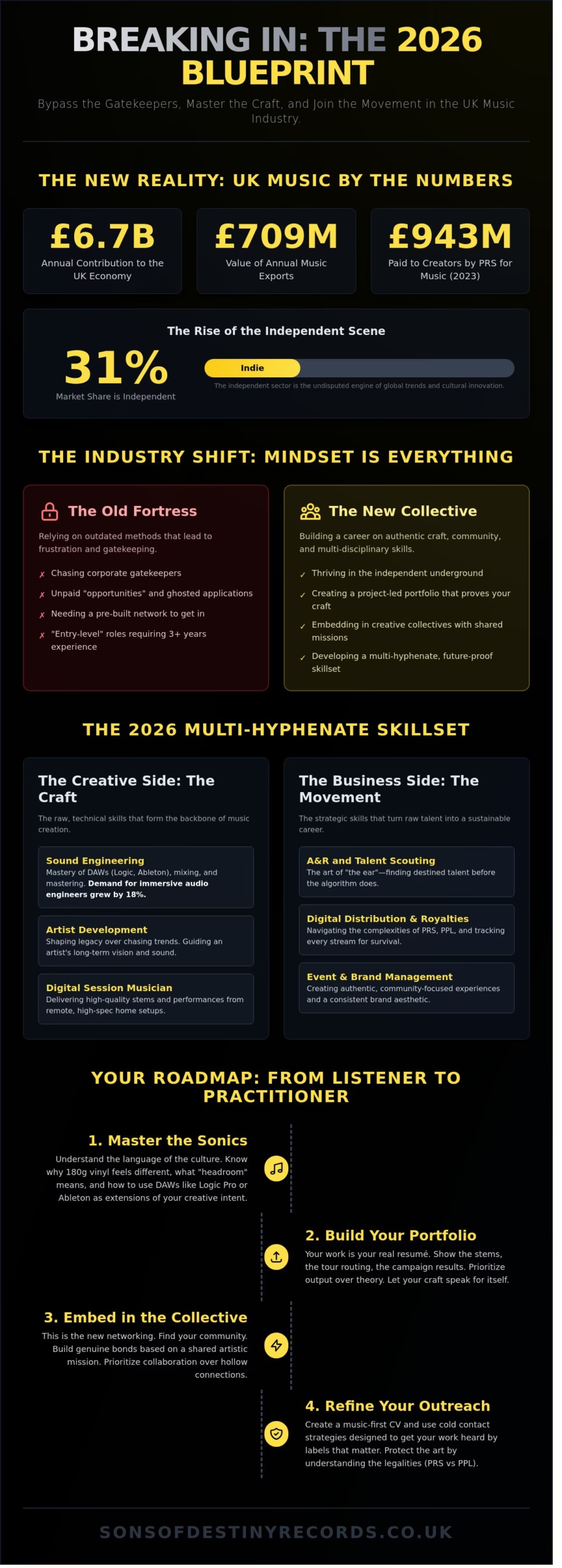
The UK music industry isn’t a closed shop; it’s a fortress built on the myth that you need a silver spoon to get through the door. Most people hunting for jobs at music find themselves trapped in a cycle of unpaid “opportunities” or ghosted applications. It’s a raw reality. UK Music’s 2023 report highlighted that the sector adds £6.7 billion to the economy, yet entry points remain obscured by corporate smoke and mirrors. You know the frustration of seeing “entry-level” roles requiring three years of experience and a network you weren’t born into.
We’re here to break that cycle. You’ll discover how to bypass the gatekeepers and build a career that pays the bills without selling your soul. We’re laying out the 2026 skill set you need to survive, from mastering the sonic landscape of independent collectives to cracking the code of major label A&R. This is your roadmap to finding a community that values the wax, the work, and the authenticity you bring to the table.
The industry is a different beast now. The old gatekeepers haven’t vanished, but their walls have crumbled. In 2026, finding jobs at music means understanding a landscape that is 31% independent, a figure that has climbed steadily since the BPI reported record-breaking indie growth in 2024. You aren’t just looking for a salary; you’re looking for a seat at the table of a collective. The major labels still hold the glass towers in London, but the pulse of the culture lives in the home studios of Hackney and the independent pressings coming out of South London.
Survival in this game demands a multi-hyphenate mindset. You can’t just be a publicist; you have to be a content creator and a data analyst. You can’t just be a producer; you must be a brand architect. The UK independent scene is the undisputed engine of global trends. When Afrobeat and Amapiano took over the charts in 2025, it wasn’t the majors who started the fire. It was the hustlers in the underground. Every role, from the person cuttin’ the wax to the one coding the smart links, is part of this sonic destiny.
Sound engineering remains the physical backbone of every session. It’s about the raw capture of a moment. In 2026, the demand for immersive audio engineers grew by 18% as spatial audio became the baseline for streaming. Artist development has returned to its roots; it’s no longer about TikTok trends but about shaping a legacy. Session musicians have adapted to a digital-first reality, often delivering stems from high-spec home setups across the UK rather than waiting for a call to Abbey Road.
A&R is still about the hunt. It’s about finding that raw, destined talent before the algorithm does. Digital distribution and royalty management are the new frontline. With UK music exports reaching £709 million in recent years, tracking every stream is vital for survival. Event management has shifted toward high-energy, community-focused experiences. It’s about bringing that “Rep Ur Country” energy to the stage, ensuring the vibe is authentic and the culture is respected. This is where the jobs at music become more than work; they become a movement.
The industry doesn’t grant passes for enthusiasm alone. It demands a visceral understanding of the craft. If you want to secure the most coveted jobs at music collectives or labels, you must transition from a listener to a practitioner. This starts with the wax. You need to understand why a 180g vinyl pressing carries a different weight, both physically and sonically, compared to a digital file. Knowledge of sonics isn’t just for engineers; it’s the language of the culture. When you speak about “warmth” or “headroom,” you’re proving you belong in the room.
Your portfolio is your real resume. Nobody cares about a three-page document listing your GCSEs. They want to see what you’ve built. Organise your work into a clean, accessible format that prioritises output over theory. If you’re a producer, show the stems. If you’re a manager, show the tour routing. Showing your work beats telling your story every single time.
Precision is everything. You need to master the industry-standard DAWs like Logic Pro or Ableton Live. These aren’t just tools; they’re extensions of your creative intent. Mixing and mastering require an obsession with the fine details. Every decibel counts when you’re aiming for a release that hits as hard in a basement club as it does on a car stereo. While YouTube has its place, it’s no substitute for a real masterclass. Finding a veteran mentor provides the grit and nuance that an algorithm cannot teach. It’s about learning the unwritten rules of the session. You can see how we apply these standards by exploring our latest vinyl pressings which embody this technical rigour.
The UK market is unique. It’s a dense, fast-moving ecosystem where a track can blow up nationally via a single pirate radio shoutout or a viral TikTok snippet. Understanding the legalities is non-negotiable. In 2023, PRS for Music paid out a record £943.6 million to songwriters and publishers. If you don’t understand how PRS and PPL differ, you’re leaving money on the table and failing to protect the art. Your social media should function as a curated professional vibe. It’s not about the numbers; it’s about the aesthetic consistency. Networking should feel like a natural extension of your passion. Build genuine bonds within the collective rather than hunting for a quick sale. The goal is to develop “the ear,” that intangible ability to spot a hit before the data catches up. Every label looks for this instinct. It’s what separates the followers from the destined.
Forget the myth of the closed shop. It’s a ghost story told by those who stayed outside. The UK industry isn’t a fortress. It’s a network of tribes. Finding your tribe is the first step to landing jobs at music. You don’t need a golden ticket or a family name. You need a pulse and a presence. In 2024, industry data suggests that 60% of roles in independent sectors are filled through community referrals rather than traditional job boards. This is the power of the collective. Working alone is a slow death. Working together is a catalyst.
Identify your centre. The UK is a map of sonic hubs, each with its own rhythm. Whether it’s the jazz-inflected streets of South London, the electronic pulse of Bristol, or the grime heritage of Birmingham, you must find where your sound lives. Authenticity is your only currency here. People in the underground smell a fake before the first bar drops. Be real. Be consistent. Be there when the lights are low and the work is hard.
Your obsession with the wax is your resume. Deep musical knowledge translates directly into A&R roles because you understand the DNA of a hit. Look at the UK Afrobeat explosion. It wasn’t built by suits in high-rise offices. It was built by curators who lived the culture and understood the rhythm of the streets. They contributed to the scene for years before they ever saw a cheque. To get jobs at music, you must prove you value the culture more than the commission. Build a community around a sound. Curate a playlist. Start a small-run zine. Become a pillar before you try to be a professional.
Digital connections are thin. Real weight is built in person. Live showcases are the true boardrooms of the underground. This is where decision-makers watch the raw energy of a performance to see who has the “it” factor. Etiquette matters. The green room is a place of business, not a fan club. The studio floor is for focus. If you want to see talent development in its purest form, grab Rep Ur Country concert tickets. This event is a cultural movement that showcases the future of the UK scene. Watching how these shows are built, from the lighting rig to the stage management, gives you a blueprint of the industry. It’s about seeing the machine in motion and finding where you fit into the gears.
Securing jobs at music requires more than a polished LinkedIn profile. Your CV shouldn’t look like a corporate ledger. It needs to be a discography of your sweat and output. Focus on projects, not just employers. If you spent 2023 managing a DIY tour or mixing EPs in a damp basement, put that at the top. The industry values the 400 tickets you sold for a local collective more than a generic degree from a distant city.
Cold outreach is an art form. Most labels delete 92% of unsolicited emails within three seconds. Don’t be the spammer. Be the sniper. Research the label’s last three vinyl pressings. Mention the specific sonic texture of their newest artist. Your pitch should feel like a conversation between creators, not a plea for a paycheck. Keep it brief. Keep it raw.
The interview is where the dream meets the data. Passion is the baseline; it’s the bare minimum. You need to back that fire with cold facts. If you’re applying for a marketing role, show how you boosted a band’s monthly listeners by 25% over a six-month campaign. If it’s a studio role, talk about your speed. Time is money in a £100-an-hour room. Rejection will happen. It’s inevitable. Use that “no” as the grit that polishes your next attempt. The hunt for jobs at music is won by those who refuse to stay down.
Indie labels operate differently than the majors. They don’t want cogs. They want the whole machine. With 70% of UK indie labels running teams of fewer than five people, you must be a versatile asset. Show them you can handle a social media crisis while simultaneously prepping a master for the pressing plant. They value “street-level” realism. They need people who understand the hustle of the underground, not just the theory of the charts.
In a trial session, your workflow is your identity. If you take two hours to find a snare sample, you’ve already lost the room. Efficiency is king. Your behaviour in the studio determines your future more than your technical skill. Be the person who anticipates the artist’s needs before they speak. This focus on practical, high-stakes execution mirrors the core of independent artist development UK strategies. It’s about being ready when the red light goes on. No excuses. Just output.
The UK scene doesn’t need more suits. It needs architects of sound. At Sons of Destiny, we’ve built a collective that prioritises the raw pulse of the street over the sterile data of a boardroom. Our mission focuses on empowering the next wave of British talent. We don’t just release tracks; we press history into the wax. Through our Rep Ur Country series, we provide a platform where identity and artistry collide. This isn’t just a career path. It’s a preordained journey. If you’re hunting for jobs at music companies that actually value the craft, you’ve found the source.
We operate at the intersection of mentorship, studio craft, and cultural events. We aren’t interested in temporary hype. We’re interested in the long game. The UK music industry contributed £6.7 billion to the economy in 2022 according to UK Music reports, but the soul of that growth lives in the underground. We believe your career is a calling. It’s a commitment to the sonic legacy of this country. Our collective is a sanctuary for those who refuse to compromise their sound for a playlist placement.
We refine unique sounds. We don’t polish them until they’re plastic. Our mentorship programme focuses on authentic voices, ensuring that artistic integrity outweighs corporate metrics every time. In our studio sessions, we bridge the gap between amateur bedroom producers and seasoned professionals. We use high-end sonic tools to ensure every beat hits with intent. It’s about the labour of the craft, not just the final export. We help you find the frequency that belongs to you alone. For artists seeking dedicated creative space away from the corporate grind, exploring an artist in residence programme can provide the focused environment needed to develop your authentic sound without compromise.
Stop waiting for a vacancy to appear on a generic job board. The industry moves too fast for slow applications. Searching for jobs at music collectives requires a different strategy: you have to create your own opportunity. Reach out to the collective for collaboration. Show us the grit in your work. Whether it’s through the Rep Ur Country series or a direct link-up, the door is open for those who have the vision. The journey is rhythmic; stay in time with your purpose. Your destiny is waiting to be pressed into reality.
The movement is growing. It’s time to decide if you’re a spectator or a creator. We don’t offer jobs; we offer a place in the lineage of British music. Stay hungry. Stay authentic. Stay destined.
The UK scene doesn’t hand out invitations. You don’t wait for permission; you build the infrastructure yourself. Securing jobs at music in 2026 requires more than a polished CV. It demands a deep immersion in the collective and a mastery of authentic Afrobeat rhythms. We’ve explored how to sharpen your technical skillset and why networking is about community, not just cold emails. Our founders bring decades of underground experience to the table, proving that independent paths lead to the most enduring legacies.
Sons of Destiny Records isn’t just another label. We’re the organisers behind the national Rep Ur Country showcase, pushing raw talent into the spotlight through grit and local passion. We value the weight of the wax and the truth in the track. If you’re ready to stop chasing shadows and start carving your name into the scene, align with a collective that understands the hustle behind the craft. The gatekeepers are fading. Your place in the narrative is waiting.
Join the movement and explore our artist development opportunities. Your sound is your legacy; make it count.
Start in the dirt by volunteering at grassroots venues or assisting independent studios. UK Music’s 2023 census reveals that 40% of industry professionals broke in through unpaid local support roles or community radio. You don’t wait for permission to find jobs at music collectives. You create your own gravity by being present where the wax is spinning and the cables are being coiled. It’s about presence and persistence.
Legal directors and senior data scientists currently command the highest salaries in the British market. According to 2024 recruitment data from Major Players, a Head of Legal at a major label can earn over £110,000 annually. These roles lack the grit of the studio, but they provide the structural steel for the industry. Technical architects in streaming services follow closely, often starting at £75,000 per year.
No, a degree isn’t a requirement for most independent or major labels. A 2022 survey by Creative UK found that 58% of creative workers didn’t hold a degree relevant to their current role. We value the ear and the hustle over paper qualifications. Show us a successful DIY marketing campaign or a sold-out local show you promoted. Real-world results are the only currency that truly matters here.
Utilise established schemes like the BPI’s mentoring programme or the Young Guns Network. The BPI’s 2024 Equality and Justice Advisory Group supports over 100 mentees annually, pairing them with seasoned veterans. Seek the wisdom of the collective by attending industry mixers at places like London’s Tileyard. Don’t just ask for help. Offer a fresh perspective on the sonic landscape to make the relationship a two-way street.
Get to the dancefloor in South London hubs like Peckham or Hackney. Data suggests that 75% of UK Afrobeat collaborations start in physical spaces like the Jazz Café or KOKO. It’s about the rhythm and the sweat, not LinkedIn. Connect with the DJs and promoters who are actually moving the culture. Authenticity is everything in this scene. If you aren’t living the culture, you won’t find the jobs at music events that matter.
Yes, legitimate internships must pay at least the National Minimum Wage to comply with UK law. As of April 2025, the rate for workers aged 21 and over is £12.21 per hour. The days of exploitation are fading as the collective demands fair trade for talent. If a label offers exposure instead of coin, walk away. Your contribution to the sonic landscape has a tangible value that requires proper compensation.
Register your business with Companies House and join PPL and PRS for Music immediately. It costs just £50 to register a company online in the UK as of 2024. Once the legal foundation is set, focus on the wax. Distribution services like Ditto or AWAL can get your sound onto global platforms. Control the destiny of your output by owning your masters and building a community around your specific sonic vision.
Digital content creation and data analysis are the most sought-after skills in the current market. A 2024 report showed that 65% of labels cited short-form video production as their top hiring priority. You need to understand how the algorithm reacts to the sound. Master the tools of the digital age to serve the art. Being able to read a Spotify Analytics dashboard is as vital as having a good ear for talent.